
I was at a meeting hosted at co-working space where I was suddenly struck by something. For a set fee a month, you get to use the co-working space in an open plan area. Walking around there, I saw a lot of people staring fixedly at their screens with their headphones on. This didn’t strike me as terribly collaborative or productive.
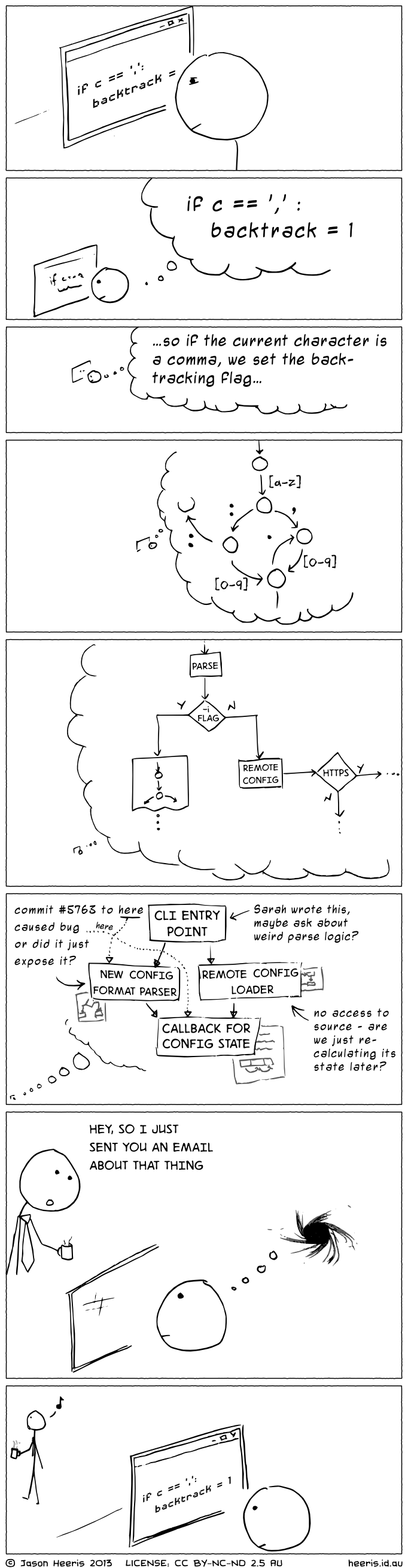 Developers like to tune everyone else out to focus on the problem at hand. You need to see the code, the more spiritual might even say feel the code, though I feel that’s a bit of the usual fluffy claptrap really. It’s about getting into the zone, and making sure you stay there so that you are productive. Being in an open plan office isn’t really conducive to that. You are constantly being bothered by interruptions; by people moving past your eye line, it’s loud. Thus, you see a lot of people with their headphones on trying to concentrate; this does seem to be completely at odds with what’s intended to be a collaborative space. You aren’t collaborating and you’re not as productive as you would be in a dedicated environment.
If you truly expect your team to be productive; then you have to make the office space fit your team; not some idealised vision of what a office should be. While it might look quite cool in pictures, having bean bags in the office is never a good idea. My entire team is distributed so we all work where we need to work, sometimes that’s in the office, most of the time it’s from home and we communicate over IM and VOIP. When we all choose to be in the office, that’s when we collaborate, I don’t try and force collaboration on the team. Even so, the office area is still very sparse; we just have a couple of big whiteboards on the wall. It’s quiet to the point of silence, but we schedule regular breaks where we collectively go for coffee, and this is when we start the collaboration process; sometimes moving back into the office to use the whiteboards.
When you’re building a product, at some point talking about what the product is has to give way to actually building it. An office space that favours interruptions isn’t going to help you do the work. Sometimes being left alone is what’s needed
Here’s to a productive day
Lewin
@quotidianEnnui
Image link: http://twitpic.com/dj27dh
 Tech Talkfest